Feed, Read, Decide
Tesera is the everyday product of OpenTesera, built on generative AI. The county’s records flow in, the AI reads them, and every upload returns a check or a draft review note for a person to decide on.
Being built for the Nairobi pilot. Building-level checks and joining agencies’ records start with the Nairobi City County partnership, in months 0 to 6. The views on this page are examples.
- Tesera Workspace
- The web tool for city teams and professionals, with the AI assistant built in.
- Tesera For Residents
- The AI assistant on WhatsApp, SMS and voice, in English, Kiswahili or Sheng. No app to download.
- Tesera API
- Area-level risk layers; building records only to the owner or with consent.
Feed
- Scanned approval file
- Drone image of a channel
- Resident’s voice note, in Sheng
The county’s records flow in: scanned approvals and inspection reports, drone and satellite imagery, and residents’ messages.
Read
- Plot number
- Read (hidden in this example)
- Approved floors
- Read (hidden in this example)
- Date
- Read (hidden in this example)
- Signed by
- Read (hidden in this example)
- Placed on plot
- Matched
Generative AI reads them: it pulls out the key fields, places each document on its plot and checks the values against the 2026 policy rules.
Decide
Checked against the 2026 policy rules
- Land useMeets the rule
- Plot coverageMeets the rule
- Registration against approvalLikely mismatch
Draft review note ready. An inspector checks the likely mismatch.
Every upload returns a check or a draft review note. A county officer reviews it and decides.
Building-level checks and joining agencies’ records start with the Nairobi City County partnership, in months 0 to 6.
Four Things People Do With It
Know What Was Approved
Ask about any plot in plain words; the AI reads approvals and imagery and answers with its sources. Residents ask: Was my building approved, and for how many floors? What risks does my area face?
- A tenant checks whether a building was approved before signing a lease.
- A county inspector ranks which sites to visit first, starting with the AI’s likely mismatches.
- A developer sees which approvals a project needs, and in what order.
18storeys built
0storeys approved
Flag for inspectionPlans not approved. Construction registered.
How the AI would flag it: the county’s register has no approved plans, but the Construction Authority shows it registered. That is a likely mismatch, for an inspector to check.
Test A Fix Before Paying For It
Describe an intervention; an AI agent sets up an established open flood model, validated in the pilot, runs it and explains the result. Clear a culvert, add a drain or set a building back from the river, and see what changes downstream.
- The county compares drainage options, each described in plain words.
- An engineer checks a new building’s effect on runoff.
- A team builds the case for climate adaptation funding.
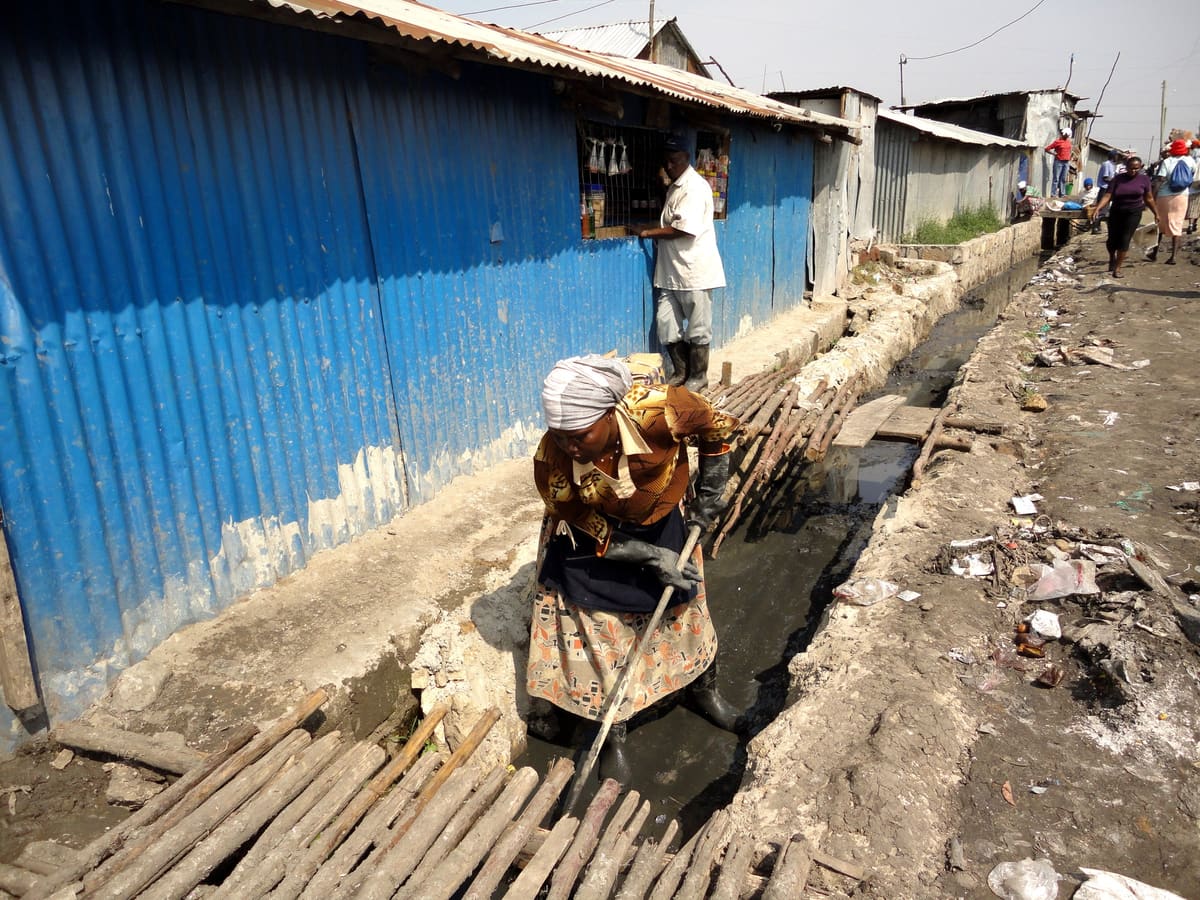
Photo: Linda Ogwell/Oxfam East Africa, CC BY 2.0.

Warn The Last Household Before The Water Arrives
AI drafts clear neighbourhood flood warnings for each ward from templates the county approves, sent by WhatsApp, SMS or a voice call to residents who opt in. After a collapse, rescuers get the building’s records, access routes and the nearby schools and clinics.
- A county disaster officer sees which neighbourhoods are at risk and approves the warning wording.
- A resident who has opted in gets a call before the river rises.
- A rescue team gets the building’s records, access routes and the nearby schools and clinics.
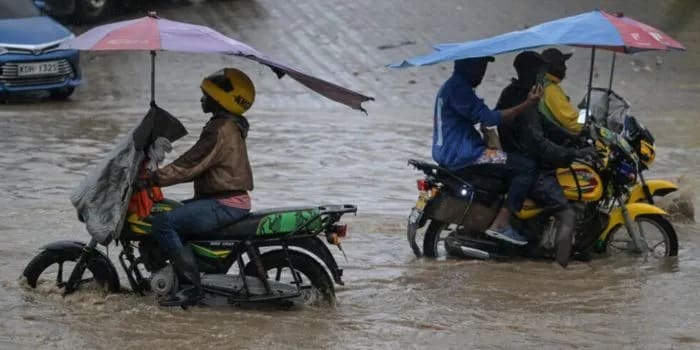
Photo: Kenyans.co.ke, All rights reserved.
The People Who Live There Know First
Send a photo or voice note; the AI transcribes it, locates it, checks it and files it. Residents, community mappers, engineers and inspectors report what they see, and a person confirms each report before it changes the map.
- A resident reports a blocked drain with a photo or a voice note in Kiswahili or Sheng.
- A community mapper updates the homes along the river.
- An inspector confirms a report on site.
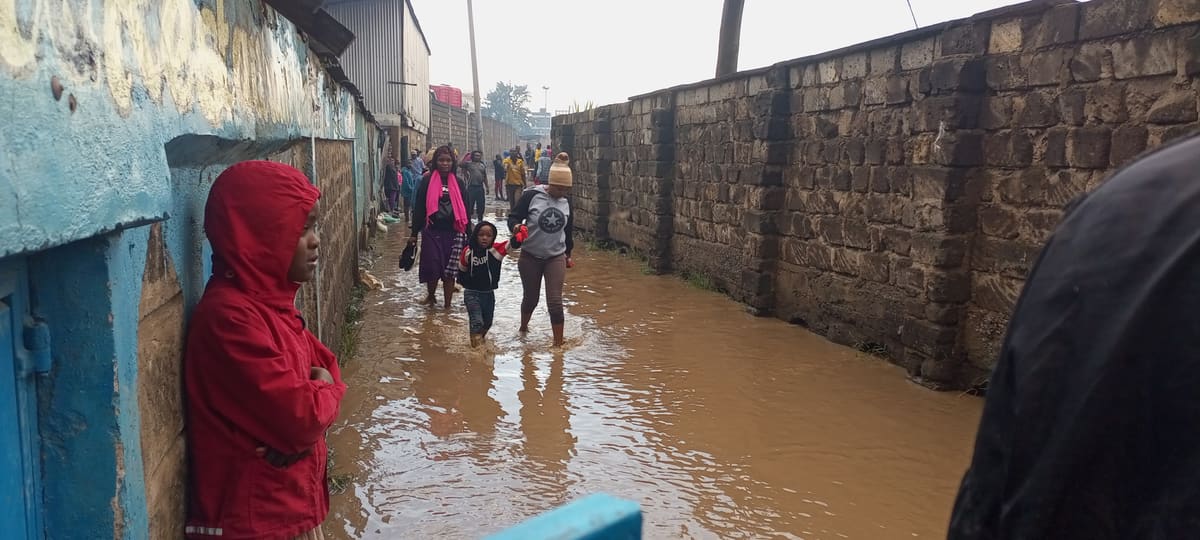
Photo: Rudian kd, CC BY-SA 4.0.

Partner With Us
City teams, residents’ organisations, researchers and funders: shape the Nairobi pilot with us.