Intelligence For The Built Environment
Generative AI that reads a city’s buildings, records and rivers, so building work that does not match its approvals is flagged for inspection before it fails, and families are warned before the floods arrive.
Piloting now in Nairobi, along the Mathare and Mukuru rivers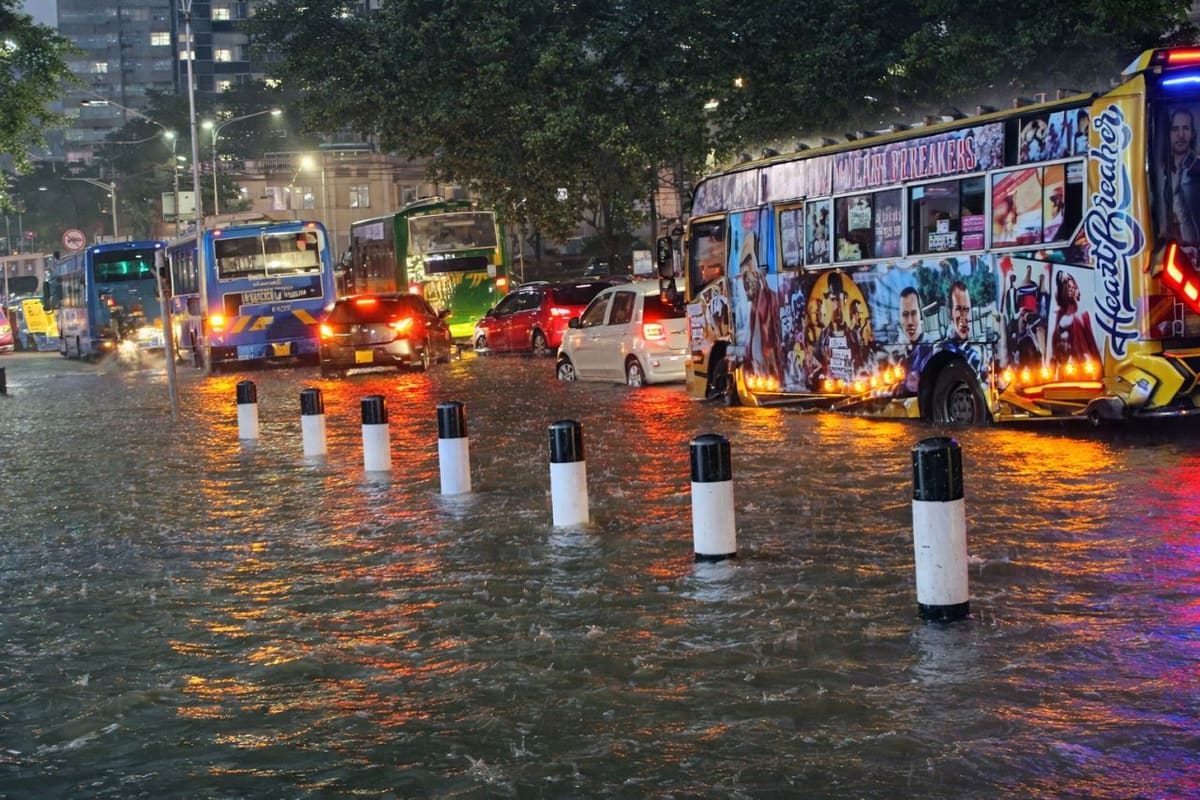
Photo: Nation Media Group, All rights reserved.
What Is At Stake
In Nairobi, buildings fail and rivers flood on the same streets.
102
people killed in 84 building collapses in Kenya since 2020.
SourceCapital FM, 19 November 2026Citing a Stats Kenya compilation of reported collapses.
2,261 of 3,908
active building sites in Nairobi passed inspection in full. About 58%.
SourceState Department for Public WorksA State Department for Public Works quality assurance report tabled in Parliament, covering inspections from 1 July 2025 to 2 April 2026. Reported by Nation.
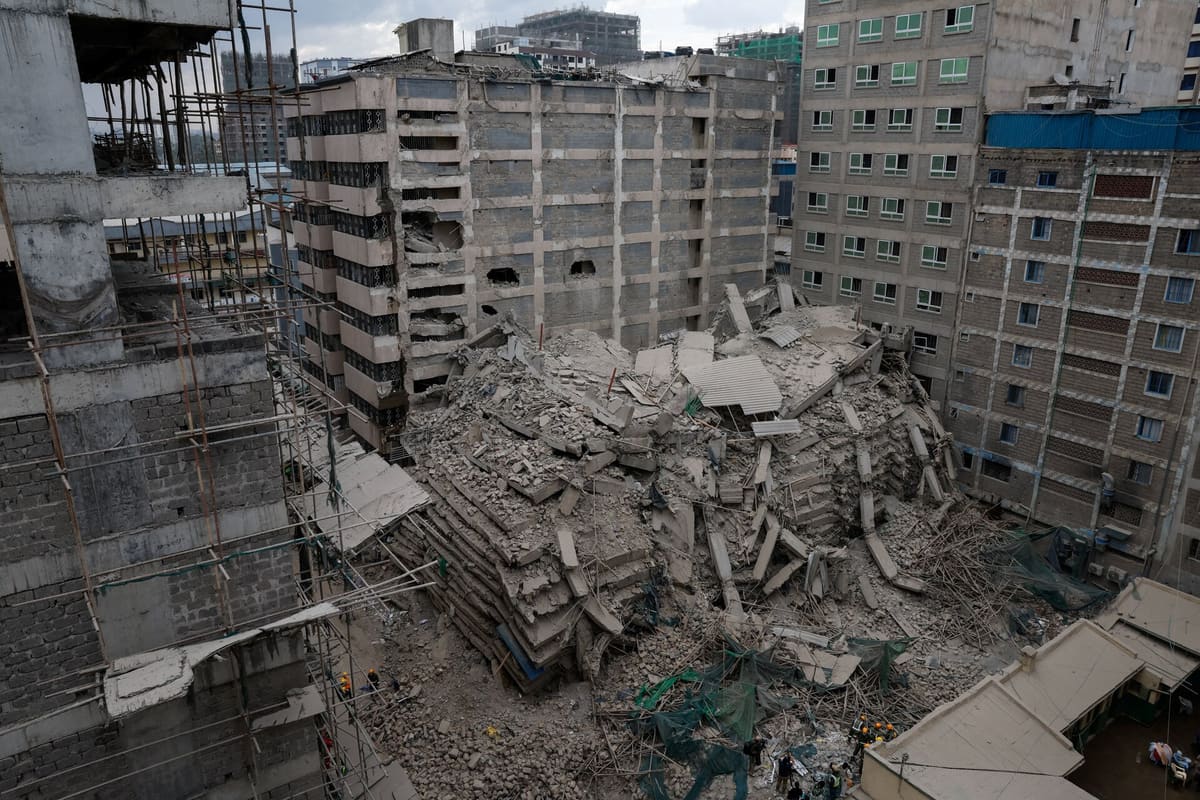
Photo: Reuters, All rights reserved.
Eastleigh, 23 October 2026
An 18-storey building on Ninth Street collapsed. Eight people were killed.
- Nairobi County had no approved plans on file.
- The approval letters were not issued by the county.
- The Construction Authority registered it anyway, on 30 July 2025.
SourceCapital FM, 19 November 2026; The StarCiting a Stats Kenya compilation of reported collapses.
18storeys built
0storeys approved
Flag for inspectionPlans not approved. Construction registered.
How the AI would flag it: the county’s register has no approved plans, but the Construction Authority shows it registered. That is a likely mismatch, for an inspector to check.
What Changes
See how we measure itFamilies Warned Before The Water Arrives
Neighbourhood flood warnings by WhatsApp, SMS or a voice call, for residents who opt in.
AI drafts a neighbourhood warning for each ward, in English, Kiswahili or Sheng, from wording the county approves.
Building Work Flagged For Inspection Before It Fails
Building work that does not match its approvals is flagged for inspection before it fails.
AI reads approvals and imagery and flags likely mismatches, checked by inspectors.
Public Money Spent Where It Protects Most
Test a new drain or a cleared culvert before paying for it.
Describe a new drain in plain words; AI sets up an established open flood model, validated in the pilot, and explains the result.
Generative AI At The Core
Nairobi’s building records are scanned paper, many neighbourhoods have never been mapped, and residents speak Kiswahili and Sheng on basic phones. Only generative AI can read, join and speak across all three at city scale.
Feed
- Scanned approval file
- Drone image of a channel
- Resident’s voice note, in Sheng
The county’s records flow in: scanned approvals and inspection reports, drone and satellite imagery, and residents’ messages.
Read
- Plot number
- Read (hidden in this example)
- Approved floors
- Read (hidden in this example)
- Date
- Read (hidden in this example)
- Signed by
- Read (hidden in this example)
- Placed on plot
- Matched
Generative AI reads them: it pulls out the key fields, places each document on its plot and checks the values against the 2026 policy rules.
Decide
Checked against the 2026 policy rules
- Land useMeets the rule
- Plot coverageMeets the rule
- Registration against approvalLikely mismatch
Draft review note ready. An inspector checks the likely mismatch.
Every upload returns a check or a draft review note. A county officer reviews it and decides.
Building-level checks and joining agencies’ records start with the Nairobi City County partnership, in months 0 to 6.
Flood risk comes from engineering flood models. Every answer shows its sources, confidence and date. The AI flags likely mismatches for inspectors to check, people approve every warning and make every enforcement decision, and AI accuracy is checked against inspectors every quarter and published.
How generative AI works in OpenTeseraWhat Already Works
Results from our own tests, before the pilot begins.
0.93 and 0.95
Drone Reads
Finds drainage channels and dumps in drone images. Blind-test F1 scores of 0.93 for channels and 0.95 for dumps, where 1 is perfect.
96.7%
Residents’ Messages
Messages in English, Kiswahili and Sheng put in the right category 96.7% of the time, with 13 of 14 place names found.
93%
County Documents
Key fields read right on 30 county documents, and 20 of 20 documents placed on the right plot.
40 of 40
2026 Policy Rules
Values from the 2026 policy rules: 40 of 40 checked.
35 of 35
Draft Review Notes
Draft review notes passed 35 of 35 checks, with no invented figures.
85 of 85
Building Growth
Building growth since 2016 mapped in all 85 of Nairobi’s wards.
7 of 7
Blind Tests
Capabilities that beat a frontier chatbot with web search in blind tests.
Live
The Demo
A live demo runs the intake flow on public NEMA reports and labelled sample documents.
Ask for the demo
Blind tests and checks run by the OpenTesera team. Ask us for the methods and test sets.
Ask A River Valley A Question
This is the Mathare valley as OpenTesera sees it today, built from open map data. Every AI answer shows its sources, its confidence and its date.
See how it works
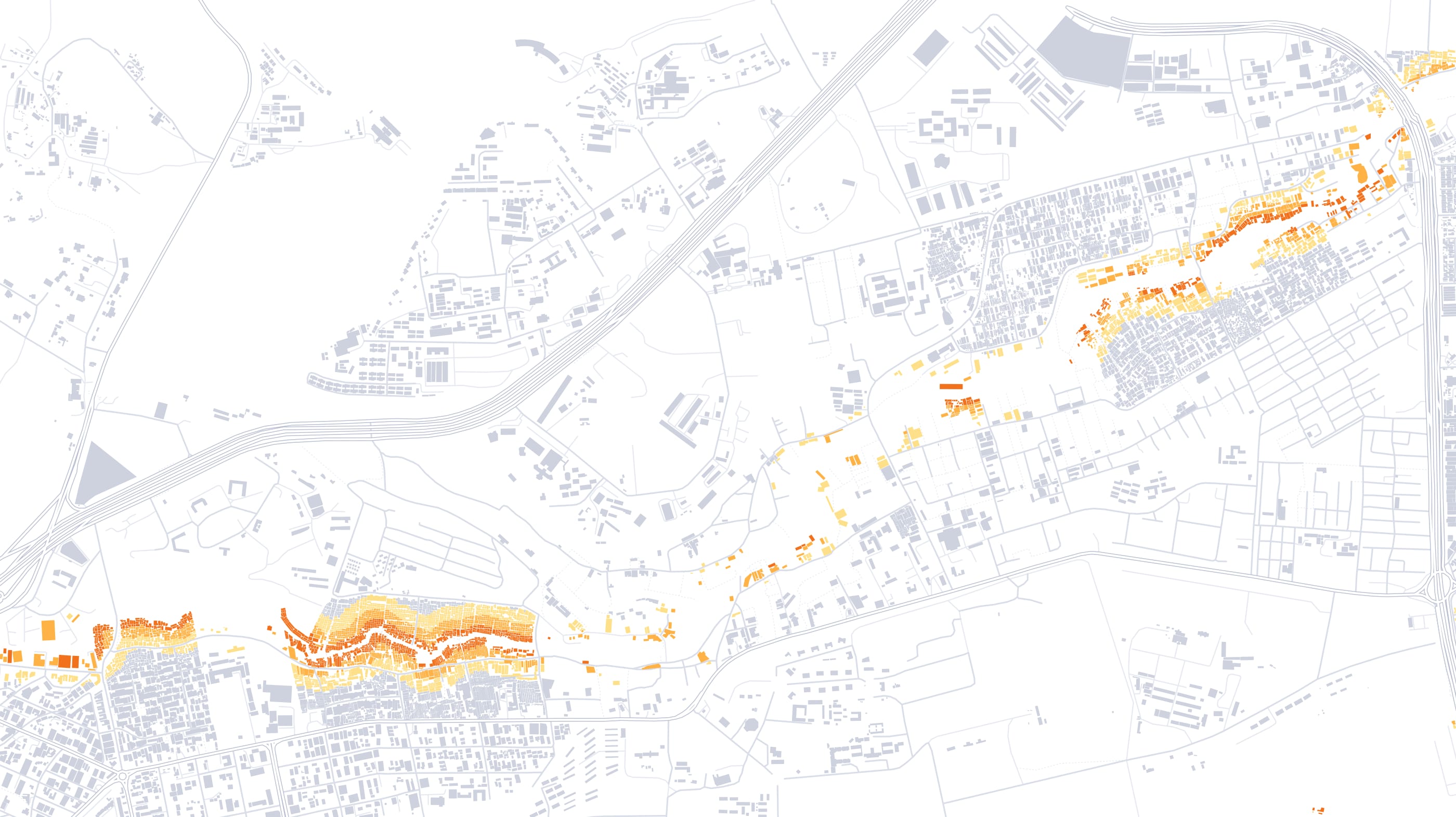
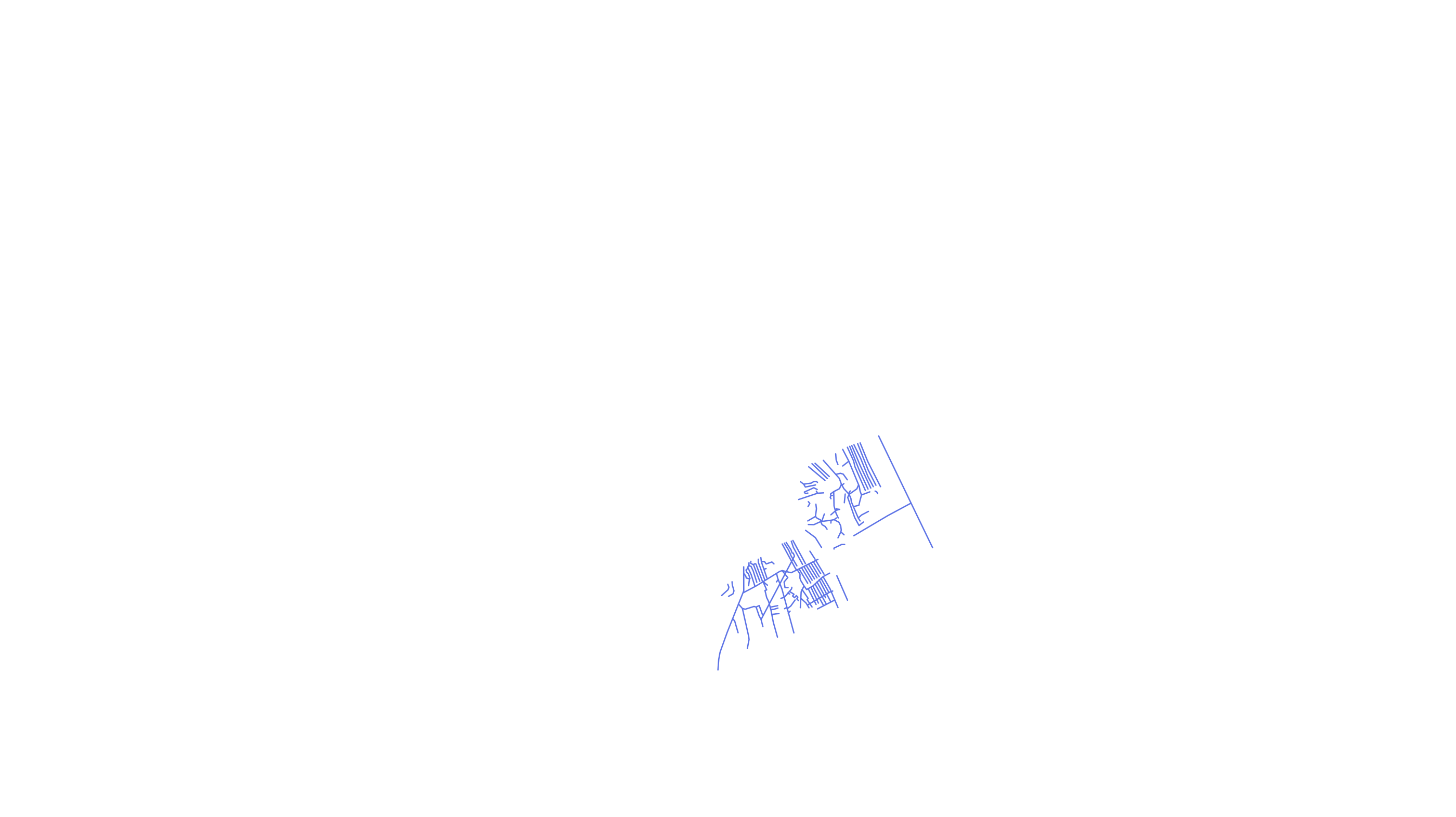
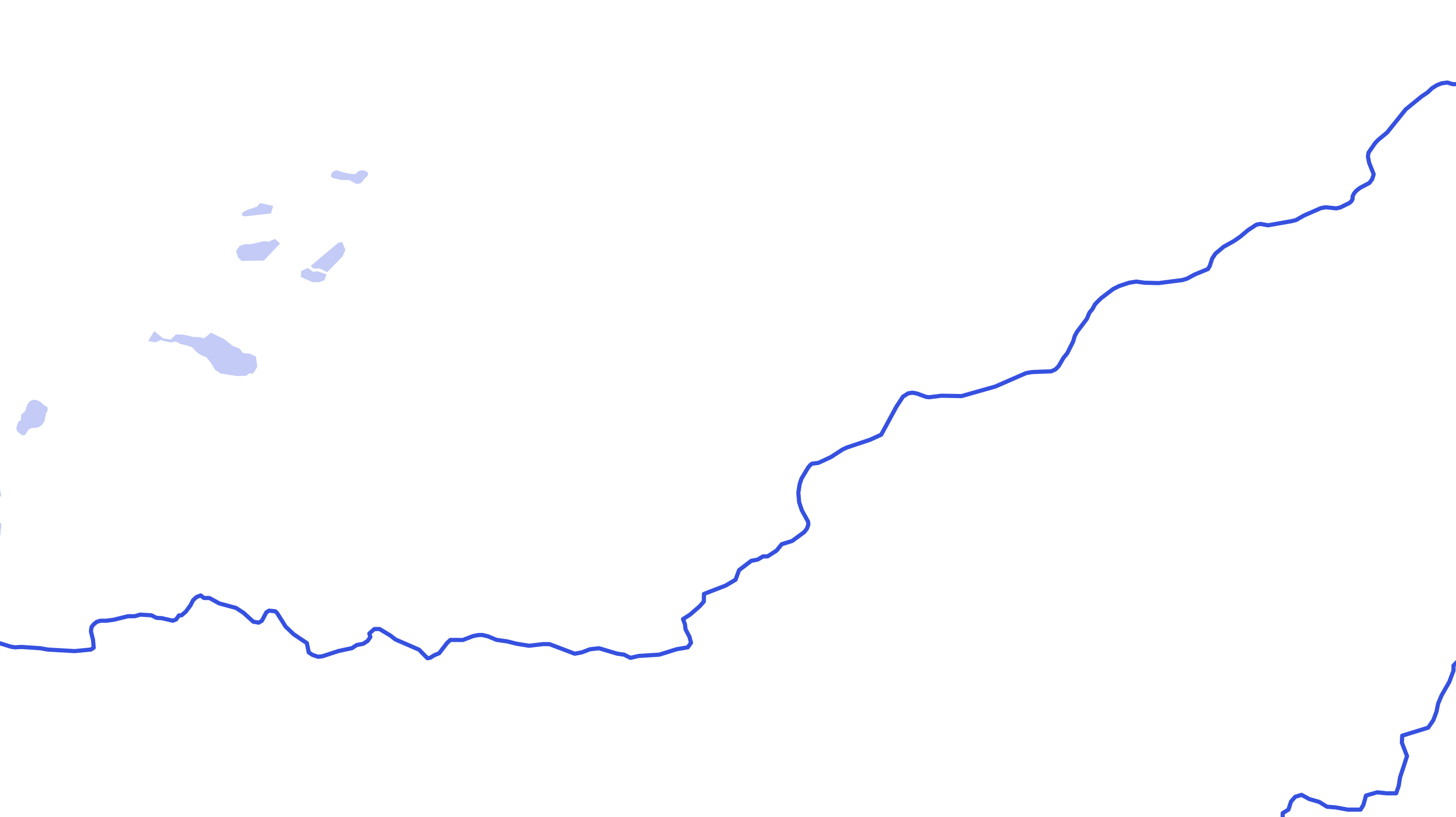
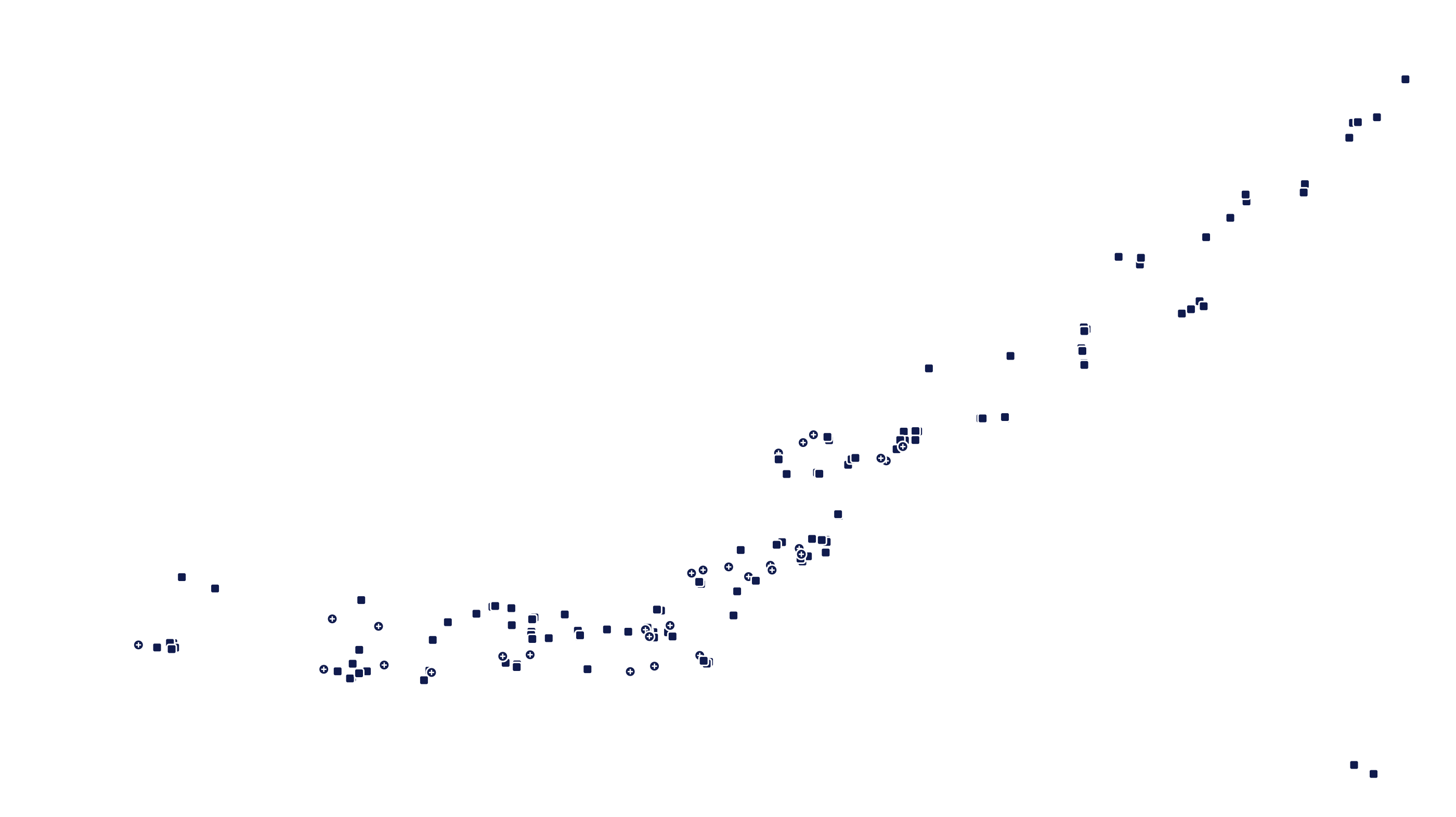
© OpenStreetMap The Mathare River valley, drawn from 10,942 building outlines mapped on OpenStreetMap, data as of 25 November 2026. Distance runs from each building’s centre to the river. This is not a flood forecast, which also needs rainfall, terrain and drainage.
Drag the map sideways to see the whole valley.
- Know
- Was my building approved, and for how many floors? The AI answers from the records, with its sources.
- Simulate
- Describe a fix; an AI agent runs an established open flood model and explains what changes.
- Respond
- AI drafts neighbourhood flood warnings from templates the county approves, for residents who opt in.
- Contribute
- Send a photo or voice note; the AI locates it, checks it and files it.
Nairobi Is Our Pilot City
We are working along two river corridors, Mathare and Mukuru, and on building approvals across the city.
- NowMapping both corridors and testing the AI on public reports and sample documents.
- NextWith the county partnership: building-level checks, joined agency records and neighbourhood flood warnings in Mathare and Mukuru.
- ThenWe measure what changed, AI accuracy included, and publish it.
- AfterA second city.
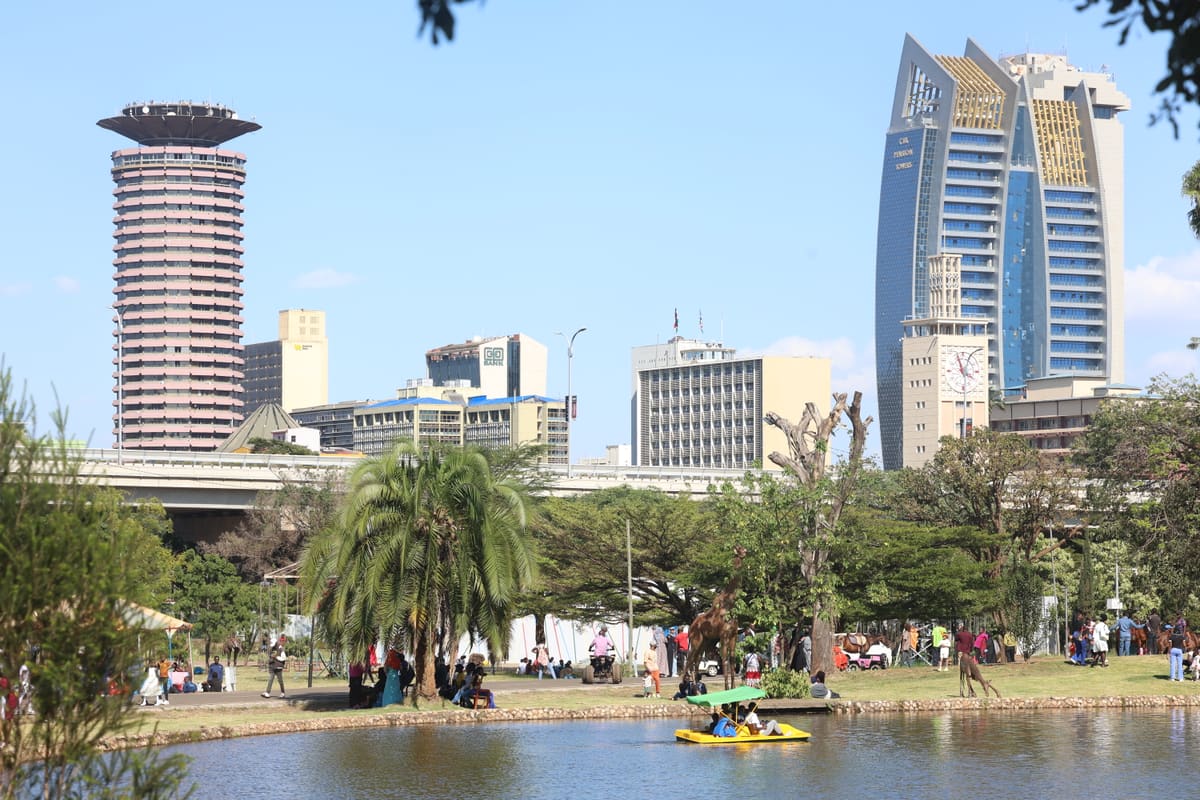
Photo: Francis Akuka for the Wikimedia Foundation, CC0 1.0.

Protection, Not Eviction
OpenTesera is never used to target demolitions or evictions that skip consultation and due process.
Communities Co‑Own Their Data
People decide how data about their homes is used.
Open By Default
Our code, methods and safe data are public.
Show The Working
Every AI answer shows its sources, confidence and date. AI never makes an enforcement decision.
Responsible AI
Models are tested on Nairobi’s own records before launch and checked against inspectors every quarter. Personal data is kept to a minimum.
Hardest Conditions First
Built for patchy data and basic phones, with no app to install.
Partner With Us
City teams, residents’ organisations, researchers and funders: tell us how you would like to work together.
Or write to hello@opentesera.org
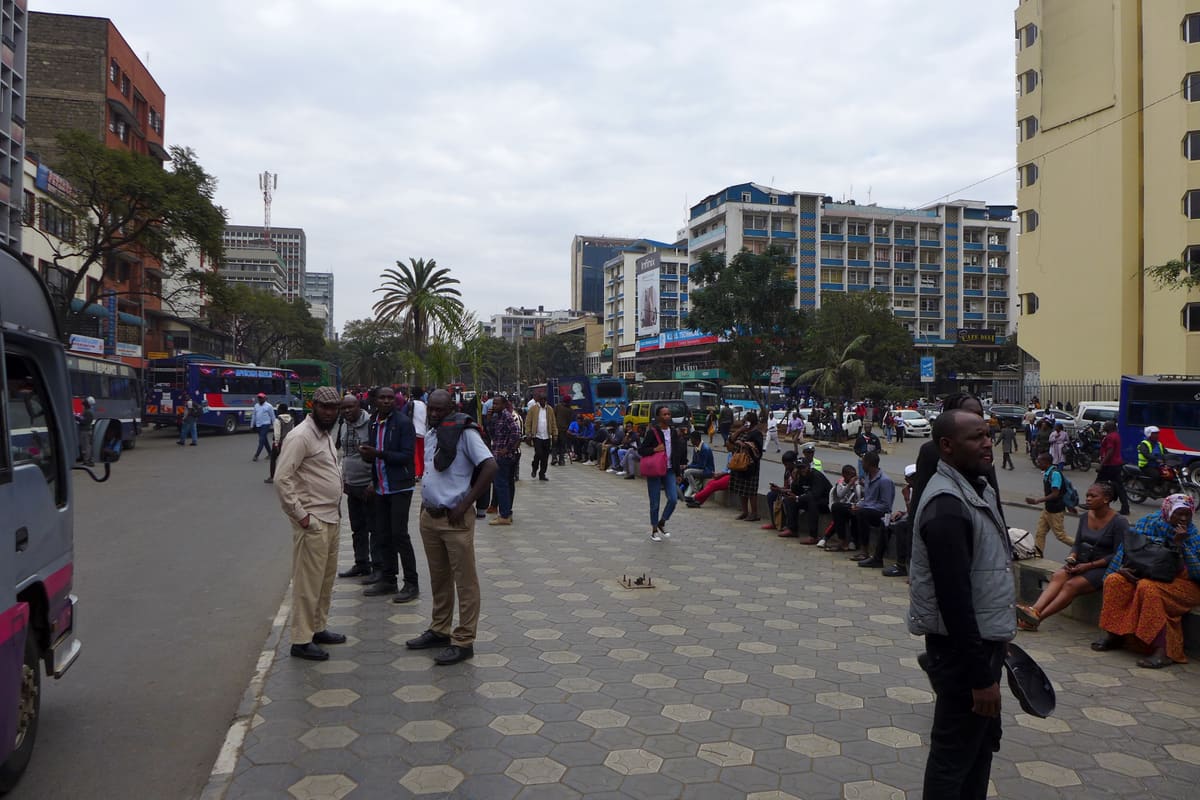
Photo: Bahnfrend, CC BY-SA 4.0.
